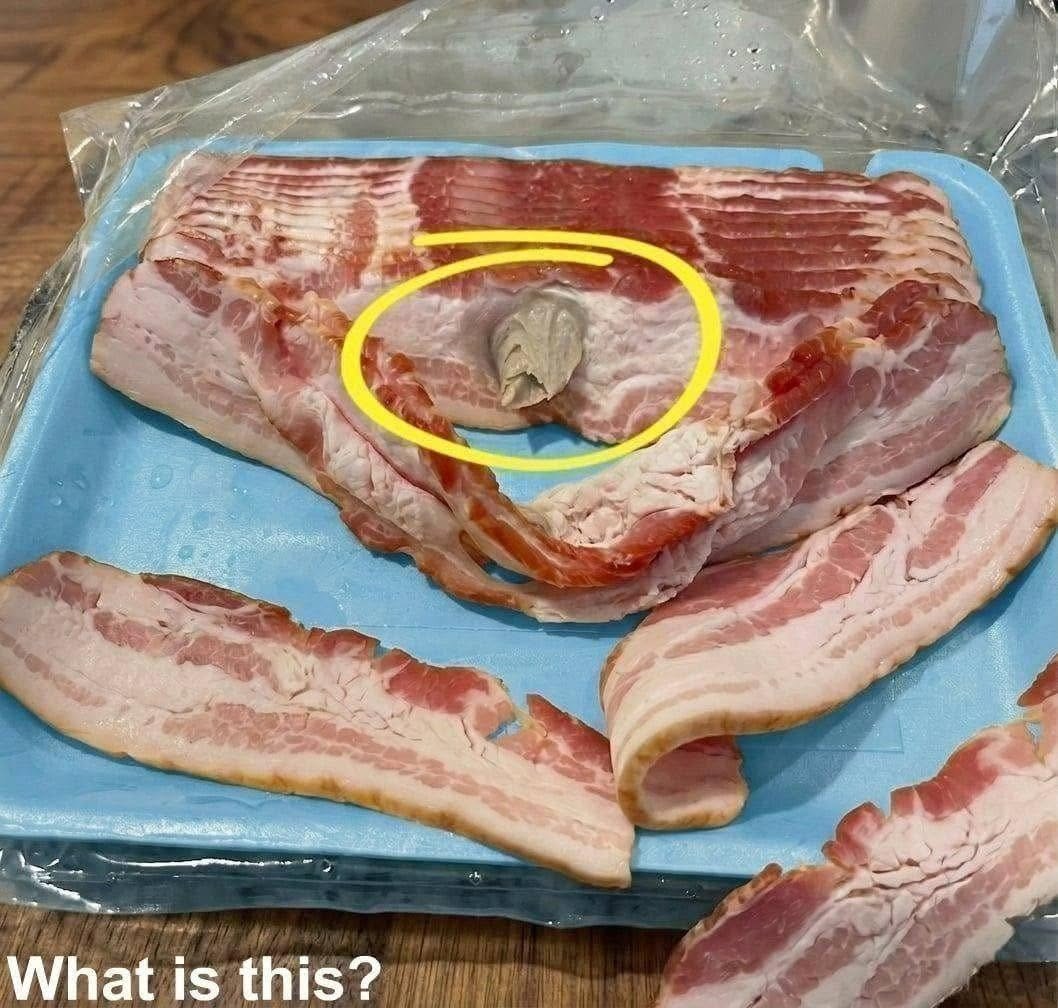
You open a package of bacon, expecting the familiar smoky aroma and pink-and-white slices. Then you notice something strange: a pale, firm lump attached to one of the slices.
It may look waxy, rubbery, or completely out of place.
Naturally, you might wonder: What is that white lump in my bacon? Is it fat, connective tissue, or something I should be worried about?
The good news is that unusual pale areas in bacon can have several ordinary explanations. A firm white or cream-colored piece may be a concentrated area of fat or other naturally occurring tissue from the pork belly.
However, appearance alone cannot reliably identify exactly what a particular lump is. That’s why it’s important to distinguish an unusual piece of normal-looking tissue from actual signs of spoilage.
What Could the White Lump in Bacon Be?
Several possibilities can explain an unusual pale or firm piece found in bacon.
1. A Concentrated Fat Deposit
One of the simplest explanations is a dense deposit of pork fat.
Bacon comes from the pork belly, which naturally contains layers of meat and fat. Those layers aren’t perfectly uniform, so occasionally a slice can contain a noticeably thicker or more compact section of fat.
It may appear:
- White or yellowish-white
- Smooth
- Firm or waxy when cold
- Irregular or rounded
- Different from the surrounding streaks of bacon fat
Fat is a normal component of bacon and will soften and render as it cooks.
If the rest of the package looks and smells normal, an isolated piece of firm fat is generally not a sign that the bacon has been contaminated.
2. Connective or Other Natural Tissue
Pork contains connective tissues and other naturally occurring structures that may occasionally become visible when the meat is processed and sliced.
A piece can look firmer or more rubbery than the surrounding bacon and may not cook in exactly the same way as ordinary fat.
Because it’s difficult to identify tissue accurately from appearance alone, don’t assume that every unusual white lump is specifically a lymph node or another particular structure.
If you don’t like the appearance or texture, you can remove the affected portion before cooking.
3. A Small Firm Tissue Structure
The original source suggests that a small lymph node can occasionally appear in processed pork. Animals do have lymph nodes as part of their immune systems, and natural tissues can sometimes remain in cuts of meat.
However, you generally cannot confirm what an unidentified lump is simply by looking at it.
If a piece looks distinctly unusual, removing it is a reasonable option. If the entire package has questionable appearance, odor, or texture, discard it rather than trying to identify the lump yourself.
What Is Normal White Fat in Bacon?
It’s important to distinguish an unusual lump from the normal white fat streaks found throughout bacon.
Typical bacon fat is:
- White or cream-colored
- Soft when warmed
- Firm when refrigerated
- Distributed in streaks or layers
- Translucent as it renders during cooking
Fat is one of the defining characteristics of bacon and is responsible for much of its familiar flavor and texture.
A concentrated area of fat can therefore look unusual without necessarily indicating a food-safety problem.
When Should You Throw Away Bacon?
The appearance of one pale piece isn’t the only thing you should consider.
If bacon has clear signs of spoilage, it’s safer to discard the package rather than trying to remove one questionable area.
Watch for:
- Strong sour or unpleasant odors
- Slimy or unusually sticky texture
- Obvious mold
- Unusual discoloration accompanied by other spoilage signs
- Packaging that is leaking, damaged, or unusually swollen
- Bacon that has been improperly stored or kept beyond recommended storage conditions
A smoky smell by itself isn’t a warning sign because bacon naturally has a distinctive aroma.
When you’re uncertain about whether meat is safe to eat, don’t rely on appearance alone. Food safety depends on proper refrigeration, handling, storage time, and cooking as well.
Why Can These Things Appear in Bacon?
Bacon is made from pork belly, a relatively complex cut containing meat, fat, connective tissue, and other natural structures.
Because bacon is sliced relatively thinly, structures that might not be obvious in a larger piece of meat can become much easier to see.
This is one reason an unusual spot or firm piece can seem surprising when you separate individual bacon slices.
The appearance doesn’t automatically indicate poor manufacturing or contamination.
How to Handle an Unusual Lump
If you discover a small pale, firm piece in an otherwise normal package of bacon, you have a few practical options.
Step 1: Look at the Whole Package
Don’t focus only on the lump. Check the bacon for obvious spoilage signs, including unusual odor, sliminess, or mold.
Step 2: Consider the Texture and Appearance
A firm white or cream-colored area may simply be concentrated fat or another natural tissue.
But remember that appearance alone cannot definitively identify it.
Step 3: Remove the Unwanted Piece
If the bacon otherwise appears normal and the piece bothers you, you can trim it away before cooking.
Step 4: Cook the Bacon Properly
Cook bacon according to safe food-handling practices and avoid cross-contaminating other foods or kitchen surfaces.
Step 5: When in Doubt, Discard It
If the bacon smells spoiled, feels slimy, or shows obvious mold or other concerning changes, don’t try to salvage it by removing the affected section.
Other Unusual Things You Might Notice in Bacon
For Complete Cooking STEPS Please Head On Over To Next Page Or Open button (>)

Why Do Hard-Boiled Eggs Get a Green Ring Around the Yolk? The Science Explained

What Is the Cabinet Above the Refrigerator Really For? Smart Storage Ideas Most People Overlook

We Found a Tiny Mystery in an Old Dresser — Then We Discovered What It Really Was
Don’t Be Fooled. They’re Selling You Meat

The Great Wine Pouring Mystery: Which Glass Is Actually Filled Correctly?