Other Unusual Things You Might Notice in Bacon
Not every unusual-looking spot means the same thing.
| What You Notice | Possible Explanation | What to Consider |
|---|---|---|
| White or cream-colored streaks | Normal fat | Common in bacon |
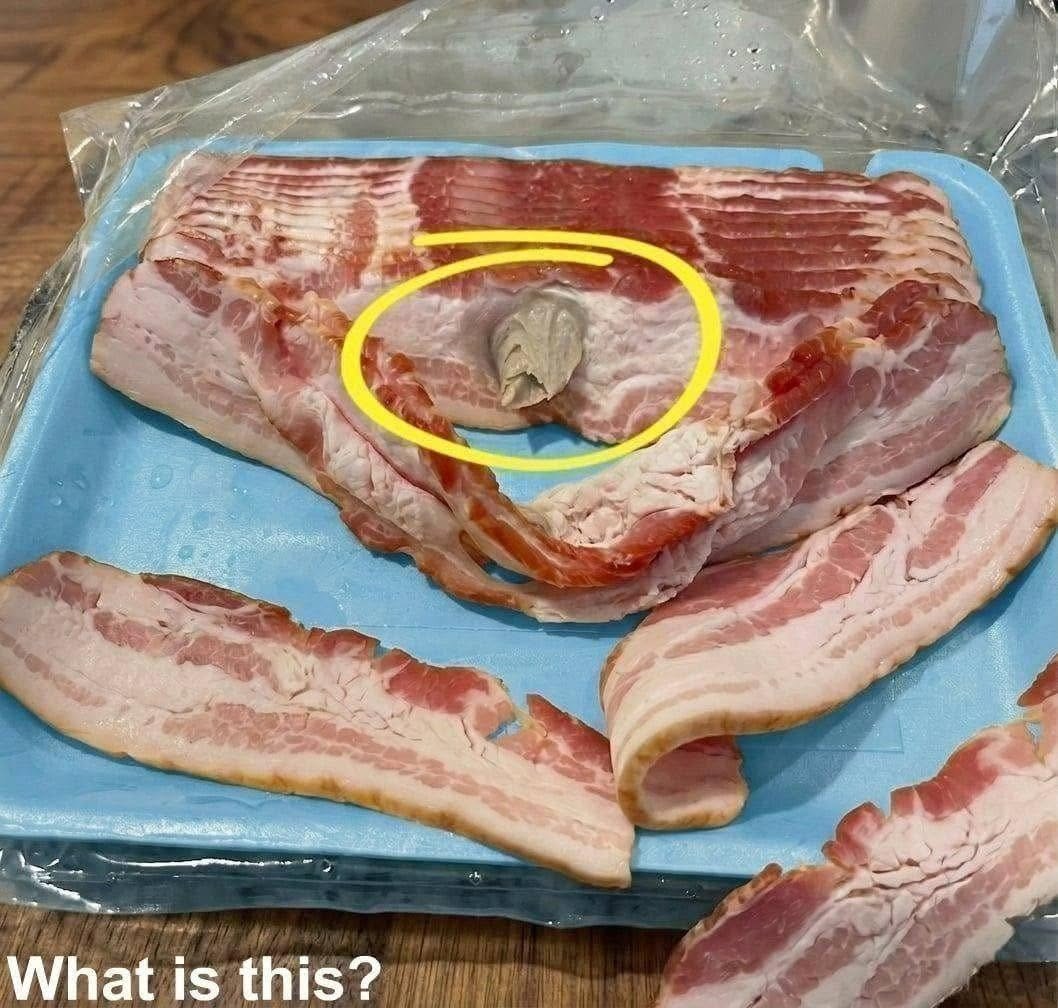
| Firm white lump | Concentrated fat or natural tissue | Remove it if unwanted |
| Small hard fragment | Possible bone or cartilage | Remove before eating |
| Darkened, dry area | Oxidation or freezer-related changes | Quality may be affected |
| Green or black fuzzy growth | Possible mold | Discard the package |
| Slimy surface | Possible spoilage | Discard the package |
| Strong sour or rancid odor | Possible spoilage | Discard the package |
A visual table like this can help, but it shouldn’t replace basic food-safety judgment when meat appears spoiled.
What About Parasites?
A large visible lump in bacon is not how pork parasites such as Trichinella are typically identified.
Trichinella infections involve microscopic larvae and cannot be reliably detected by simply inspecting a piece of bacon.
That means you shouldn’t try to determine whether pork is safe by searching for visible parasites. Proper food handling, cooking, and following food-safety recommendations are much more important.
Is the Lump a Tumor?
It’s not possible to determine from a photograph or visual inspection alone whether an unidentified piece of tissue is a tumor or another specific biological structure.
For that reason, it’s better not to label an unexplained lump with certainty.
If the appearance is unusual enough to make you uncomfortable, the simplest approach is to discard the affected portion—or the entire package if there are additional signs that the bacon may not be safe.
Can You Eat the Lump?
If the piece is simply normal pork fat or another harmless natural tissue, cooking it doesn’t necessarily create a food-safety concern.
However, you don’t need to eat an unidentified piece simply because the rest of the bacon appears normal.
If the texture looks unpleasant or you’re uncomfortable with it, remove it.
The more important question is whether the bacon as a whole has been stored and handled properly and whether it shows signs of spoilage.
Does This Mean the Bacon Is Low Quality?
Not necessarily.
Finding an unusual piece of natural tissue doesn’t automatically mean the bacon is defective or unsafe.
Processing methods vary between producers, and the amount of trimming can differ from one product to another. Some packages may simply contain more noticeable natural structures than others.
If you consistently dislike the appearance or texture of a particular brand, trying another product with different processing or trimming practices may give you a better experience.
Frequently Asked Questions
Why does my bacon have a hard white spot?
A hard white spot may be concentrated fat or another natural tissue. Small hard fragments can also have different explanations. If you’re unsure what you’re seeing, remove the piece rather than trying to identify it with certainty.
Is a white lump in bacon always fat?
No. A pale lump can have more than one possible explanation, and appearance alone isn’t enough to identify it precisely.
Is a white piece of bacon dangerous?
A normal white streak of fat is a common part of bacon. An unusual lump isn’t automatically dangerous, but you should check the package for broader signs of spoilage before deciding whether to use it.
What if the bacon smells sour?
A strong sour, rancid, or otherwise unpleasant odor is a reason to discard the bacon rather than trying to remove only the unusual piece.
What if the bacon is slimy?
An unusually slimy or sticky texture can indicate spoilage. When combined with other concerning changes, the safest choice is to discard the package.
Can I just cut off a strange piece?
If the bacon otherwise appears normal and the piece is simply an unwanted area of fat or natural tissue, removing it is a practical option. If there are signs of spoilage, don’t rely on trimming one section to make the rest safe.
Final Thoughts
Finding a strange white or pale lump in a package of bacon can certainly be surprising, especially when you’re expecting every slice to look uniform.
In many cases, the explanation may be completely ordinary—such as a concentrated area of pork fat or another naturally occurring tissue.
The important thing is not to panic or assume that an unusual-looking piece automatically means contamination.
Instead, look at the entire package. Check the smell, texture, appearance, storage history, and any other signs that could indicate spoilage.
If everything else looks normal and the piece simply bothers you, removing it is an easy solution. But if the bacon has a strong unpleasant odor, a slimy texture, visible mold, or other obvious spoilage signs, it’s better to discard it.
So the next time you uncover an unexpected white spot or firm piece in your bacon, you’ll know that there can be several ordinary explanations—and that food-safety warning signs matter more than the appearance of one unusual piece alone.
For Complete Cooking STEPS Please Head On Over To Next Page Or Open button (>)

Why Do Hard-Boiled Eggs Get a Green Ring Around the Yolk? The Science Explained

What Is the Cabinet Above the Refrigerator Really For? Smart Storage Ideas Most People Overlook

We Found a Tiny Mystery in an Old Dresser — Then We Discovered What It Really Was
Don’t Be Fooled. They’re Selling You Meat

The Great Wine Pouring Mystery: Which Glass Is Actually Filled Correctly?