Picture yourself hosting a cozy dinner with friends. The table is set, the food is ready, and you’ve just opened a bottle of red wine. You pick up the bottle, reach for the glasses—and suddenly wonder:
How much wine should you actually pour?
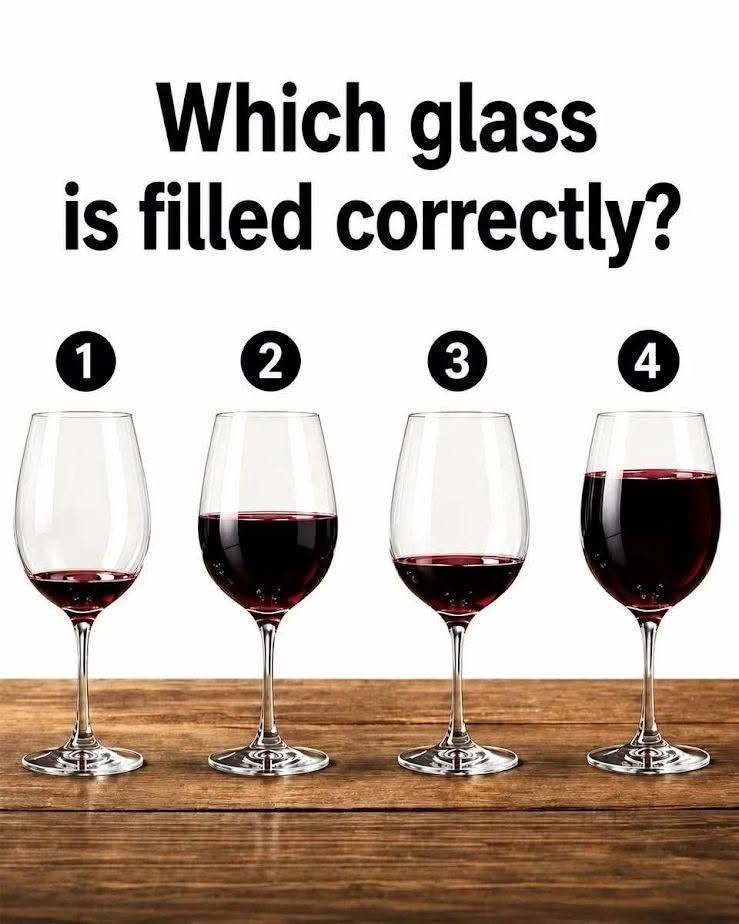
This simple question has sparked plenty of debate. If you look at four wine glasses filled to different levels, which one represents the proper pour?
At first, the answer may seem obvious. One glass contains barely a sip, another looks moderate, while another is filled almost to the rim. But the correct amount isn’t simply about how full the glass looks.
To understand the best pour, it helps to consider wine glass design, aroma, swirling, serving size, and wine etiquette.
Meet the Four Different Pours
Let’s imagine four glasses, each representing a different approach to serving wine.
Glass 1: The Micro-Pour
This glass contains only a small amount of wine at the bottom.
While a small pour can make sense during a formal tasting, where guests may sample numerous wines, it can look rather sparse at an ordinary dinner.
For a relaxed meal, this amount may leave your guest wondering whether the bottle is almost empty.
Glass 2: The Moderate Pour
The second glass contains a more substantial serving without filling the bowl excessively.
It provides enough wine to enjoy while leaving plenty of room above the liquid. This extra space becomes important when you’re drinking aromatic wines that benefit from swirling and smelling.
Glass 3: The Generous Pour
Glass 3 contains noticeably more wine than Glass 2 but still leaves room near the top.
At first glance, it may seem like the most generous and impressive serving. However, more wine isn’t necessarily better when it comes to wine etiquette.
The shape and size of the glass matter just as much as the volume being poured.
Glass 4: The Overflowing Pour
Glass 4 is filled almost to the rim.
It certainly looks generous, but it’s difficult to swirl without spilling. More importantly, leaving no room above the wine makes it much harder to appreciate the aromas that collect inside the bowl.
For that reason, filling a wine glass to the very top generally isn’t considered good serving practice.
Why Are Wine Glasses Shaped That Way?
For Complete Cooking STEPS Please Head On Over To Next Page Or Open button (>)

What Is the Cabinet Above the Refrigerator Really For? Smart Storage Ideas Most People Overlook

We Found a Tiny Mystery in an Old Dresser — Then We Discovered What It Really Was

Don’t Be Fooled. They’re Selling You Meat