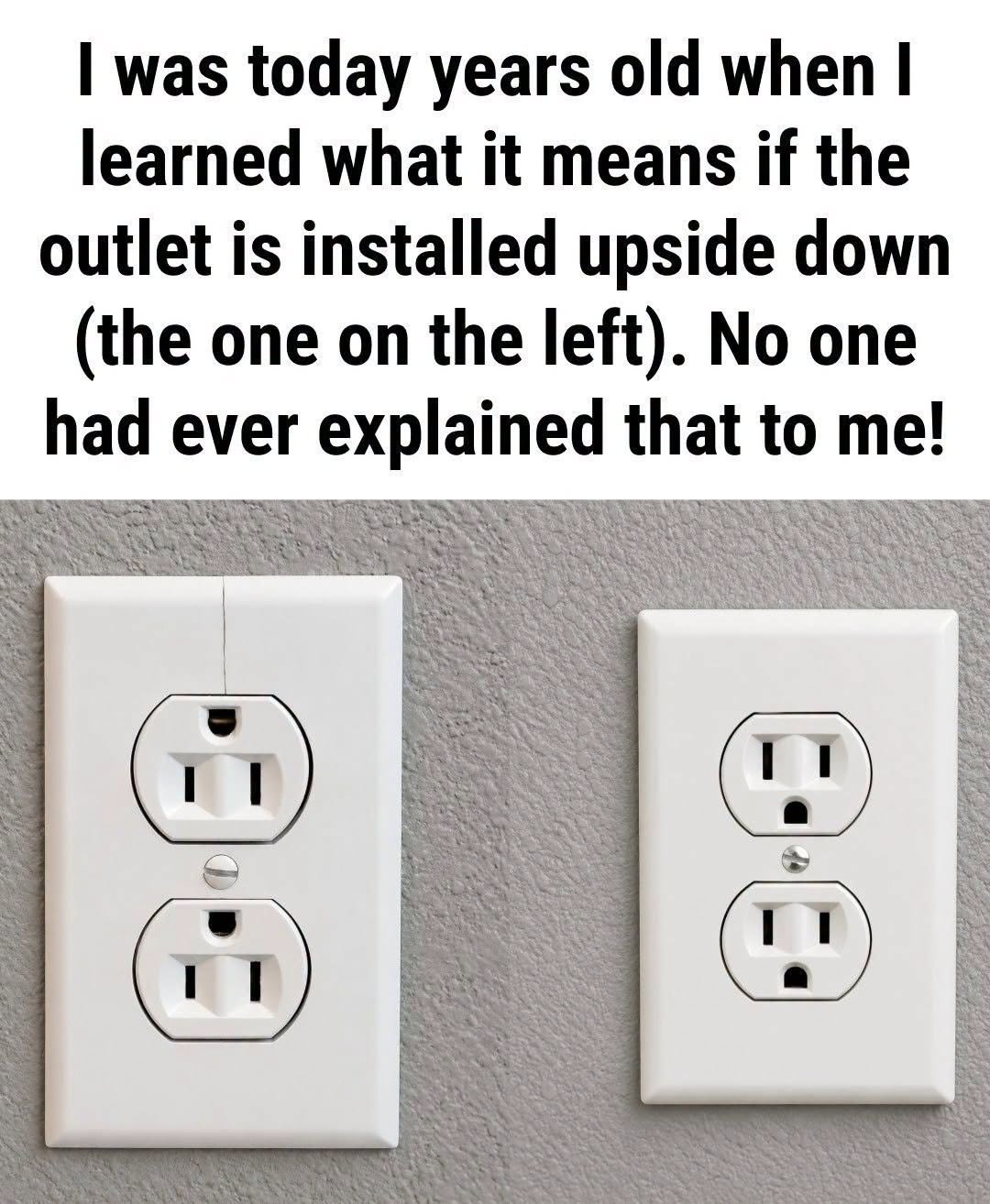
Why Are Some Outlets Installed With the Grounding Opening on Top?
Another reason an outlet may appear “upside down” is that some electricians prefer ground-up receptacle orientation.
One argument for this arrangement involves a loose plug. If a conductive object were to fall behind the plug, the grounding contact may be encountered before the energized contacts, depending on the circumstances.
Ground-up installations can be seen in some commercial and specialized environments, although residential practices vary considerably.
Importantly, the orientation of the receptacle alone does not determine whether an electrical installation is safe.
Outlet Orientation Is Not the Same as Electrical Safety
Whether the grounding opening is positioned at the top or bottom, electrical safety depends on much more than appearance.
Important factors include:
- Proper wiring and secure connections
- Correct grounding
- Appropriate circuit protection
- Proper receptacle selection
- Compliance with applicable electrical requirements
- Correct installation of GFCI protection where required
- The condition of the receptacle and surrounding wiring
An upside-down outlet isn’t automatically dangerous, just as a conventional-looking outlet isn’t automatically safe.
Don’t Assume a Dead Outlet Is Broken
A receptacle that doesn’t provide power can sometimes be mistaken for a defective outlet.
Before assuming something is broken, check nearby wall switches. In bedrooms, living rooms, dens, and older houses, a wall switch may control a receptacle rather than a ceiling light.
This can explain why a lamp suddenly works after someone flips a switch that initially appeared to do nothing.
Once you identify a switch-controlled outlet, it can be quite convenient. A floor lamp or table lamp connected to the switched portion can provide room lighting without requiring additional wiring.
Be Careful About What You Plug Into a Switched Outlet
If only one portion of a receptacle is switch-controlled, pay attention to what you connect to each half.
Devices that need uninterrupted power should generally not be connected to a receptacle that may be switched off. Depending on the installation, losing power could interrupt devices such as networking equipment, clocks, or other electronics.
Never overload a receptacle or circuit. High-wattage appliances should be used according to their manufacturer’s instructions and the electrical capacity of the circuit.
If you notice burn marks, buzzing, unusual warmth, a burning smell, sparking, or a loose-fitting plug, stop using the receptacle and have it inspected by a qualified electrician.
Should You Turn an Outlet Upside Down Yourself?
It may look like a simple matter of removing the cover and rotating the receptacle, but electrical work can involve serious hazards.
Changing the orientation requires accessing the electrical box and potentially disturbing wiring connections. Incorrect work can create risks including electric shock, overheating, equipment damage, or electrical fire.
If you’re not trained and experienced in residential electrical work, it’s safer to have a qualified electrician inspect or modify the receptacle.
This is especially important in older homes, where wiring configurations may differ from modern installations. Renters should also check with their landlord or property manager before making electrical modifications.
The Small Detail That Can Tell You Something About Your Home
An upside-down electrical outlet may look like an installation mistake, but sometimes it was installed that way intentionally.
In certain homes, the unusual orientation can indicate a switch-controlled receptacle, particularly in rooms where lamps provide the primary lighting. In other cases, however, the orientation may simply reflect the electrician’s or homeowner’s preference.
The best approach is not to rely on appearance alone. If you’re curious about an unusual outlet, safely test it with a lamp and nearby wall switches rather than making assumptions about the wiring.
And if you encounter damaged wiring, unusual electrical behavior, or an outlet that shows signs of overheating, leave the electrical work to a qualified professional.
For Complete Cooking STEPS Please Head On Over To Next Page Or Open button (>)